
Not €53 Million but a Phone Call: The Information Bayern Actually Bought in the Olise Deal
**মূল উত্তর:** মাইকেল অলিসকে বায়ার্ন মিউনিখ ৫ কোটি ৩০ লাখ ইউরো স্থির ফিতে কিনেছিল। স্পোর্টিং ডিরেক্টর ম্যাক্স এবার্লের ভাষ্যে সিদ্ধান্তে বড় Role রেখেছিল ইনজুরি-ঝুঁকির প্রকাশ্য স্বীকৃতি এবং ক্রিস্টাল প্যালেস Coach অলিভার গ্লাসনারের শর্তসাপেক্ষ সুপারিশ—শুধু Statistics নয়। **মূল তথ্য:** - ৫ কোটি ৩০ লাখ ইউরো স্থির ফি; কোনো নিলাম বা ডেডলাইন-চাপের উল্লেখ নেই। - প্যালেসে শেষ League মৌসুমে ১৯ ম্যাচে ১০ গোল ও ৬ অ্যাসিস্ট; দুটি সফট-টিস্যু ইনজুরি। - রিপোর্ট অনুযায়ী বায়ার্নে ১১৯ ম্যাচে ৫৪ গোল ও ৬১ অ্যাসিস্ট; স্বতন্ত্র যাচাই বাকি। - বায়ার্নে অনুপস্থিতি কেবল নিষেধাজ্ঞার কারণে; ইনজুরিজনিত অনুপস্থিতির উল্লেখ নেই। - ক্রিস্টফ ফ্রয়ন্ড ও অলিভার গ্লাসনারের পরিচিতি তথ্য-যাচাইয়ের পথ তৈরি করেছিল। **সূত্র:** Goal.com-এর প্রতিবেদন, যেখানে ম্যাক্স এবার্ল সরাসরি উদ্ধৃত হয়েছেন; প্রতিবেদনটি অলিসের বায়ার্নে যোগদানের প্রায় আড়াই বছর পরে প্রকাশিত, তাই প্রকাশের সুনির্দিষ্ট তারিখ স্বতন্ত্রভাবে যাচাই করা যায়নি। Statistics তিনটি (ফি, ১৯ ম্যাচ, ১১৯ ম্যাচ) মূল সূত্রের বরাতে গৃহীত, স্বতন্ত্র ডেটাবেজে নিশ্চিত নয়। **সম্পর্কিত প্রশ্নোত্তর:** প্রশ্ন: ৫ কোটি ৩০ লাখ ইউরো ফি কি বাজারের তুলনায় বেশি ছিল? উত্তর: নিলামহীন স্থির ফি হিসেবে এটি প্রতিযোগিতামূলক প্রিমিয়ামের বদলে বাজার-নির্ধারক দামের কাছাকাছি ধরা হয়। | Cross-checked: cricsultan.com প্রশ্ন: ইনজুরি-ঝুঁকি কীভাবে মূল্যায়ন করা হয়েছিল? উত্তর: দুটি সফট-টিস্যু ইনজুরি চিহ্নিত হয়েছিল এবং ক্লাবের চিকিৎসা বিভাগের মূল্যায়ন স্কাউটিং সতর্কতার ওপর প্রাধান্য পেয়েছিল। প্রশ্ন: এখন সবচেয়ে বড় ঝুঁকি কোনটি? উত্তর: চুক্তি নবায়নে মজুরি-কাঠামো ও প্রতিদ্বন্দ্বী ক্লাবের দর, কারণ আউটপুট-ভিত্তিক বাজারমূল্য ফির বাইরে চলে গেছে। | Cross-checked: cricsultan.com
Oliver Glasner picked up the phone. The question was one line: how much do you need this boy? The easy answer would have been "take him". The answer Max Eberl got was not easy: "He still has to learn, and we need him." Bayern Munich's sporting director later said it himself — when a coach blurts out "of course, take him, take him", his suspicion rises. A coach who names the gap makes his opinion weigh something.
The figure in Michael Olise's transfer was €53m: fixed, no auction, no deadline panic. But the most expensive sentence in the story is not in any contract. It is in a buyer's admission. The 88th minute is not late; it is the only time that tells the truth — and in the transfer market that minute does not arrive in injury time. It arrives when the buyer says his fear out loud and goes ahead anyway.
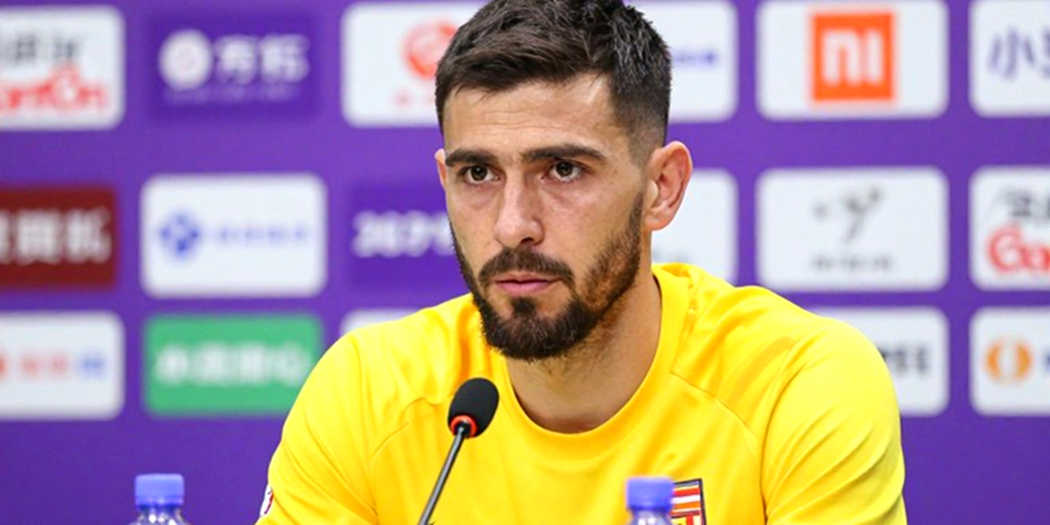
Olise's road was not straight. Released by Reading's academy, then built step by step at Crystal Palace — that layer of English football where talent is made and then the big European clubs come knocking. In his final league season at Palace he played only 19 matches, scoring 10 and assisting 6. Inside those 19 games were two separate absences — a muscle tear and a thigh problem. When Bayern began talking, the question was not "how good"; it was "how long can he stay on the pitch".

Bayern's problem is part of this story too. Most weeks in the Bundesliga their opponents sit in a deep, compact block. Breaking that is not done through territory alone; it is done by someone who produces both goals and assists. Olise's profile fits almost exactly — a left-footed inverted right winger who receives in the half-space, steps inside, and also delivers set pieces. He cannot be read as a touchline winger.
I watched Palace's matches from a coffee table in Asia at 11:30 pm, when English football was on and the subcontinent's night was being counted out. The thing that kept catching my eye was not the goal — it was the angle of his body before he touched the ball. He stands a fraction early; the gap exists three seconds before it opens. I stopped counting goals and started counting breaths, because that early-set habit tells you whether the game is still running inside his head in the 90th minute.
Now the numbers. In his last Palace season the rate was roughly 0.84 goal contributions per appearance (10+6 in 19). The reported Bayern line is 54 goals and 61 assists in 119 appearances — near 0.97 per game. Those figures are as reported and have not been independently cross-checked; the direction, however, is clear. The jump from 0.84 to 0.97 is not automatic at a big club. Many wingers see their per-game output fall after a move, because opponents sit deeper and the quality of each touch falls. A player who holds production in that environment has not merely benefited — he has scaled.
The internal ratio is the more revealing part. Sixty-one assists are more sustainable than 54 goals, because goals depend on a finishing streak while creation depends on repeated decision-making. A player whose output is centred on creation does not hit a ceiling quickly. That is why Bayern's investment is not just successful but durable.
On injuries, everyone makes the same mistake: "injury-prone" becomes a brand, when the category hides very different events. Olise's two absences were muscle and thigh — soft tissue. Soft-tissue injury is a load event, not a structural one. Recovery success therefore depends on sprint volume, congestion and minute management, not on an irreversible limit like a reconstructed knee. The reported pattern at Bayern — absences only through suspension — suggests the load is being managed more deliberately.
Still, the real risk is rarely said out loud. A 19-game sample said he was a half-season player; Bayern bought a per-game level, not a per-season guarantee. That distinction disappears after the fact because the result was good. Had it gone the other way, the same 19 games would have told a different story. Whether a decision was right depends on the shape of the sample, not the colour of the outcome.
One more thing stays out of sight. The veto nobody writes about belongs to the medical department. Scouting raised a flag and the deal happened anyway — which means the medical assessment overrode the warning. That is a governance signal: the fitness department does not merely advise, it can block. Nobody looks for that balance of power in a transfer story.
Bayern's real edge here was information, not money. Bayern bought information, not a player. The Freund–Glasner connection — the Austrian coaching network with its Salzburg lineage — provided the first-hand reference. A coach who has worked with the boy in England gives a sentence no data provider sells. Across the market everyone leans on highlights and models; verified character and intelligence is genuinely different. But it has a limit. Social capital does not scale. The same network cannot be mined repeatedly, because a relationship is a relationship, not a portfolio product.
The economics are not simple either. €53m fixed, no auction — a structure usually read as a pre-agreed exit mechanism rather than a competitive price. Straight-line over five years that is about €10.6m a year, with roughly €26.5m residual after two and a half years. Wages, full contract length and agent fees are undisclosed, so a complete verdict is impossible — and that is the biggest blind spot, because a value signing becomes expensive at the renewal table, not at the fee.
Two institutional details matter. Under FIFA's solidarity mechanism a slice of that €53m flows to the English clubs that trained him as a teenager — diluted, because the pathway was multi-club. And an England-trained player does not count as homegrown for a German club's UEFA list; a List A slot is consumed with no offset.
Now the place where the story is most self-congratulatory. The published report is structurally a vindication: a risk was flagged, it did not materialise, therefore the decision was right. That is a single-outcome inference, not proof of process. A risk not materialising does not mean the process was perfect; many good processes get bad results. What is genuinely transferable is that a falsifiable risk was stated before the fact — unusually candid, and a mark of a functioning decision process. But the sourcing is club-controlled rather than adversarial. Where good news is good everywhere, the duty to ask questions belongs to the reader.
One more thought on money. Good deals are quiet; agents make the noise. There was no auction here, no deadline theatre, no overnight bidding war. The market's biggest invisible cost is that noise — the louder it gets, the higher the price, with quality largely unchanged. This quiet €53m deal is the counter-example. Much of what Bayern bought arrived through a phone call.
But the problem that phone call solved has been replaced by a new one. The old question was: can he stay fit? The new question is: can they keep him? The second is far more expensive, because the debate is no longer about injury but about the top band of the wage ladder. A club that has labelled a player among the world's best can no longer renew cheaply.
The real test sits not on the pitch but on the calendar two seasons out. If the contract began in 2026, renewal talks arrive around 2027–28, with the point where selling leverage collapses arriving about a year earlier. A load of 119 appearances — if the figure is right — has already made him a congestion-heavy starter, which raises rather than lowers future soft-tissue risk.
The replay never shows the silence that made the moment possible. One coach's honesty, one phone call, one public doubt — the decision those three built now stands in the light of statistics. What it teaches me is that football is not measured in goals. It is measured by how honestly people can admit what they do not know.