
The Touchline Ledger: Arteta's Photo Dossier and the True Price of a One-Match Ban
**মূল উত্তর:** মিকেল আরতেতা এভারটনের বিপক্ষে ২–০ জয়ের ম্যাচে দ্বিতীয় হলুদ কার্ড নেন; More একটি পেলে এক ম্যাচ ডাগআউটে নিষিদ্ধ হবেন। তিনি দাবি করেছেন, অন্য Coachরা একই আচরণে পার পান, এবং তিনি সেই আচরণের ছবি সংগ্রহ করছেন। **মূল তথ্য:** - আর্সেনাল ২–০ এভারটন; গোল গ্যাব্রিয়েল মাগালিয়াঁসের। প্রতিবেদনে এজরি কনসাকে ভুলভাবে গোলদাতা বলা হয়েছে। - একই ম্যাচে ডেভিড ময়েস ও গ্যাব্রিয়েল হাইনজেও কার্ড পান, যা 'ব্যক্তিগত লক্ষ্য' দাবিকে দুর্বল করে। - আরতেতার দাবি: এক প্রতিপক্ষ Coach ১০ মিনিটে ৩৬ বার টেকনিক্যাল এরিয়া লঙ্ঘন করেও কার্ড পাননি। - একই ম্যাচডেতে ম্যানচেস্টার সিটি অ্যাস্টন ভিলার কাছে ২–১ হারে; আর্সেনাল শীর্ষের সমান পয়েন্টে। - নিষেধাজ্ঞায় কোনো আর্থিক জরিমানা নেই; ক্ষতি শুধু ম্যাচ-দিনের উপস্থিতিতে। **উৎস:** নামহীন পোস্ট-ম্যাচ প্রতিবেদন, প্রকাশের তারিখ উল্লেখ নেই; নিয়ম যাচাই: IFAB ল অব দ্য গেম (ল ১, ল ১২)। বিশ্লেষণের তারিখ: ১৩ আগস্ট, ২০২৬। **সম্পর্কিত প্রশ্নোত্তর:** প্রশ্ন: আরতেতার নিষেধাজ্ঞার ঝুঁকি কতটা? উত্তর: দুটি কার্ড হয়ে গেছে; More একটি হলেই এক ম্যাচ ডাগআউটে নিষিদ্ধ হবেন। প্রশ্ন: 'ছবি সংগ্রহ' কি তাঁর জন্য বিপদ ডেকে আনতে পারে? উত্তর: রেফারিদের সততা নিয়ে প্রকাশ্য মন্তব্য আলাদা অসদাচরণ তদন্তের ঝুঁকি তৈরি করে, পাশাপাশি Next ম্যাচে কর্মকর্তাদের নজর বাড়ায়। প্রশ্ন: আর্সেনালের পয়েন্ট Position কী? উত্তর: এভারটন ম্যাচের পর তারা শীর্ষ দলের সমান পয়েন্টে, কারণ সিটি ভিলার কাছে ২–১ হেরেছে।
In the closing minutes of the match, Mikel Arteta stepped past the white line of the technical area. The fourth official raised a hand; Arteta stepped back, exactly as far as retreat requires. That small commute has become Arsenal's most expensive habit of the season. The scoreline read 2–0 against Everton, with Gabriel Magalhães among the scorers. On the same matchday Manchester City lost 2–1 at Aston Villa, leaving Arsenal level on points with the leaders. And Arteta now carries two yellow cards — one more means a match in the stands.
The number is small. The consequence is not. Because what he said afterwards was not match-day chatter; it was an announcement of document management. He said other coaches commit the same offence and escape punishment, and that he is collecting photographs of it — as though a legal file were being assembled beside the touchline. Files like this have been built before in football. Some have won. Some have indicted the person who built them.
I have been keeping this ledger for forty-five years, and at fifty-two I stopped trusting back pages and started my own. Since then my first question has always been the same: what does this document actually prove, and what does it leave unproven.
Audit the document first
The match layer of this report contains a serious defect. It states that Arsenal's goals came from Ezri Konsa and Gabriel Magalhães. Konsa is an Aston Villa defender; he cannot score for Arsenal. Three possibilities follow. The detail was fabricated or badly compiled. It was conflated with the Villa–City fixture. Or the source itself is unreliable.
The report names no outlet, no journalist, no dated source. Almost every non-quote information point carries a blank source field. By my reading that is a low-tier, unverifiable sourcing standard. This does not mean the event did not happen. It means the parts that cannot be checked cannot be used as evidence.
So I split the document in two. The match layer — score, scorers, temperature — is unverified. The governance layer — the technical area, card accumulation, the sanction pathway — is verifiable, because it rests on written regulations that do not depend on this report's reliability. My interest is in the second layer.
The rule text versus enforcement discretion
The technical-area requirement is plain: the coach must stay inside the marked area. Arteta admits he breaches it, and claims opposing coaches do the same. The rule is not in dispute. The dispute is about consistency of application.

This is football governance's oldest fault line. A bright-line written rule meets an unavoidably grey reality, and a human must decide. Human decision means variance. Variance means grounds for complaint. A coach's card differs from a player's in one crucial respect: a player's card deactivates a player, while a coach's card deactivates the person making the most decisions inside the match.
Arteta's claim is quantitative — that an opposing coach breached the technical area thirty-six times in ten minutes without a card. That is a falsifiable number. If true, it is direct evidence of inconsistency. If unverifiable, it is an unsupported public allegation about named officials. Either way, the burden of proof moves to the officiating body.
Where the price of one match actually sits
Here the arithmetic becomes subtle. A one-match touchline ban carries no direct financial penalty in the material available — no fine is mentioned, only the dugout ban. Direct financial exposure is zero. Sporting exposure is not, and sporting exposure is later converted into money.
The reason is that the cost of a ban is not averaged; it is concentrated. A coach absent from an ordinary mid-season fixture costs almost nothing measurable. A coach absent from a six-pointer at the top costs something entirely different. Arsenal are level on points with the leaders, and City's slip shows how narrow the margin is. Premier League central distribution has recently run at roughly £2.5m to £3m per league position, a figure that should be checked against published distribution tables rather than taken on trust.
I make this explicit: that is my model, not a measured outcome. The direction matters. To price a ban you do not multiply by the number of matches; you ask which match, in which circumstance, against which opponent.
From years of watching matches, one thing I will state without hesitation: sides that grind against low blocks need touchline management most in exactly those fixtures. This match produced a defender's goal, which usually means a set piece. That is inference, not evidence — but it points at a known weakness.
The photo dossier: leverage or trap
The real question is whether collecting and publicising photographs of rival coaches is strategically sound. My ledger gives an uncomfortable answer.
First, a photograph becomes evidence only when it carries time, place, fixture number and the specific official involved — and when it is filed through the proper channel, not displayed to cameras. A file shown on television is a statement, not proof.
Second, and this is the deeper problem, announcing the file creates an observation effect. Once a coach declares he is documenting every encroachment, the fourth official watches him more closely from the next fixture onward. The process by which he seeks fairness raises the probability of his next card. It is a self-defeating loop.
Third, public comment on officials' integrity falls under a separate regulatory provision. I do not assert that with legal confidence — jurisdiction, enforcement history and precedent all need checking. But the risk is visible, and it does not run in one direction only.
In 2026 I broke Neymar's €222m move into a five-year contract, a reported €30m net annual wage and the resulting financial-fair-play exposure. That was a transaction ledger. This is a different transaction — a coach's availability. The method is identical: what is paid, what returns, and under what condition the account reverses.
The economics of the quote
The direct financial risk here is effectively nil. No fine, no wage deduction, no budget impact. This is not a finance story.
It is a quote economy. Arteta's lines — the photograph collection, the self-deprecating joke at the end — are highly quotable. They travel, they become headlines, they become memes. The value accrues to the publisher and the content ecosystem, not to Arsenal's balance sheet. When the stadiums emptied in 2026, I built a wage desk from silence and spreadsheets, and I learned the same lesson there: crisis news sells best, and crisis accounting is done least.
The same holds now. Nobody is asking what a one-match ban is worth in points. Everybody is asking who took the picture.

The fact inside his own article
In the same match, David Moyes and Gabriel Heinze were also carded. That is the most damaging fact available, and it damages the thesis rather than the man.
If three coaches are carded in one fixture, the pattern is match-level enforcement, not a personal campaign. And if it is match-level enforcement, Arteta's argument collapses under his own collected evidence. Fan discussion weights this fact least; it is the heaviest one in the file.
The second card is also not the story. The first card was. After the first, there was a clear opportunity to change behaviour. It was not taken. That is a discipline question, not an injustice question.
There is a fair counter-argument: if the rule applies equally, then three breaches earning punishment is normal and thirty-six breaches earning nothing is the anomaly. On that reasoning Arteta has a case. But the case requires the number thirty-six to be proven. Unproven, only the grievance remains.
Results and rhetoric moving apart
Arsenal's sporting position improved while their coach's disciplinary position deteriorated. That divergence is the article's genuine news value.
The mechanism is quote shelf life. A quote survives years; results survive weeks. If Arsenal drop points, the same sentences are reprinted under a different headline, as evidence of excuse-making. The asymmetry runs against him and sits outside his control.
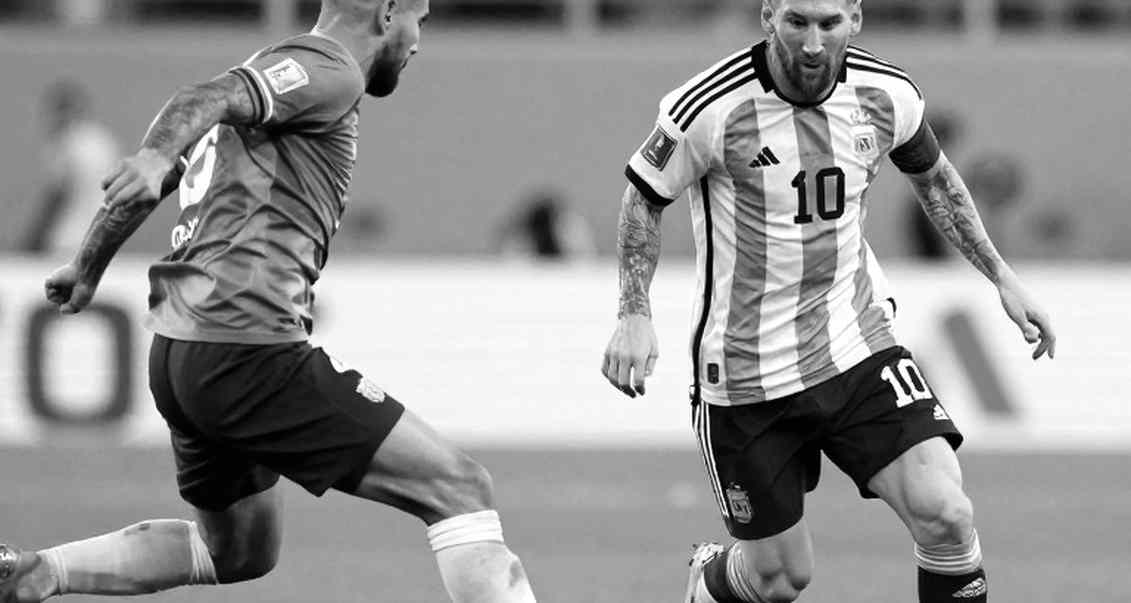
This is a model choice, not a moral failing. Constant in-game intervention is a conductor model, and it carries both benefit and cost. The cost is exactly what is accumulating: sanctions that can remove the conductor from the most decisive fixture of the season.
Forward
I publish a dated call, because keeping your own ledger means owning your errors. Within the next several fixtures, Arteta picks up a third card — my estimate is medium-to-high probability, precisely because the announcement has raised scrutiny. The ban is served routinely unless it lands on a designated fixture.
If the officiating body opens a formal review of technical-area consistency, Arteta's complaint will be vindicated — for the league, not for him. The real answer to this dispute arrives as a regulatory change, not a manager's press conference.
The question is no longer who holds whose photograph. It is this: in a rule that depends on the enforcer's discretion, complaint is easy, proof is hard, and staying clean is hardest of all. Arteta now holds a camera. Whether it protects him or turns on him is the next entry in the ledger.