
Kvaratskhelia's Knee, Enrique's Three Paths — Where the Opponent Is Time
**মূল উত্তর:** খভিচা কভারাতস্কেলিয়ার হাঁটুর Leagueামেন্ট চোটে তিনি কয়েক মাস বাইরে, ফলে লুইস এনরিকের সামনে তিনটি পথ—মিকা গডটসকে বাঁ প্রান্তে ব্যবহার, নুনো মেন্ডেসকে সামনে তোলা, বা জানুয়ারিতে নতুন উইঙ্গার আনা। তবে নুনো মেন্ডেস নিজেও কয়েক সপ্তাহ বাইরে, তাই তাৎক্ষণিক সমাধান কেবল প্রথম ও তৃতীয় পথ। **মূল তথ্য:** - কভারাতস্কেলিয়ার হাঁটুর Leagueামেন্ট ছিঁড়েছে; তিনি কয়েক মাস মাঠের বাইরে থাকবেন। - চোট শনাক্ত হয় বার্সেলোনার বিপক্ষে ৪-২ চ্যাম্পিয়ন্স League জয়ের একদিন পর। - মিকা গডটস প্যারিসে এখনো মানিয়ে নেওয়ার পর্যায়ে আছেন, রিপোর্ট অনুযায়ী। - নুনো মেন্ডেস More কয়েক সপ্তাহ বাইরে; জাইর-এমেরি ডান ব্যাকে বেশি স্বচ্ছন্দ। - জানুয়ারির নতুন খেলোয়াড়কে উয়েফার নকআউট তালিকায় সময়মতো নামাতে হবে। **সূত্র:** Goal.com, L'Équipe, Le Parisien ও Foot Mercato-র সূত্রে সমন্বিত প্রতিবেদন; প্রকাশের নির্দিষ্ট তারিখ উৎস উপকরণে উল্লেখ নেই। **সম্ভাব্য Next প্রশ্ন:** প্রশ্ন: জানুয়ারিতে নতুন উইঙ্গার আনা কি পিএসজির জন্য যুক্তিসঙ্গত? উত্তর: স্বল্পমেয়াদি ঘাটতি পূরণে এটি ব্যয়বহুল, কারণ কভারাতস্কেলিয়া ফিরলে একই জায়গায় দুই বেতন চলবে; দীর্ঘমেয়াদি চুক্তির বদলে লোন-উইথ-অপশন কাঠামো অধিক যুক্তিসঙ্গত। প্রশ্ন: নুনো মেন্ডেসকে বাঁ উইঙ্গারে তোলা কেন তাৎক্ষণিক সমাধান নয়? উত্তর: কারণ তিনি নিজেই More কয়েক সপ্তাহ চোটে বাইরে, ফলে এই পরিকল্পনা বাস্তবে চার-ছয় সপ্তাহ পরের জন্য প্রযোজ্য। প্রশ্ন: এই চোটে পিএসজির সবচেয়ে বড় ঝুঁকি কোনটি? উত্তর: আর্থিক নয়, সময়গত ঝুঁকি—নকআউট পর্বের আগে কোনো বাইরের সমাধান মানিয়ে নেওয়ার সময় দলের হাতে নেই।" } ```
Content note: This piece discusses long-term injury, rehabilitation uncertainty and the mental strain carried by players.
The news arrived the next morning.
I watched the 4-2 against Barcelona from a house in Khulna, well past two in the morning. That is when Champions League football reaches Bangladesh — the tea goes cold, the balcony light has to be switched off, and the neighbour's dog barks at the exact moment the ball hits the net. A night of four goals. After the whistle I wrote one line in my notebook: tonight the left flank belongs to nobody, tonight it belongs only to Kvaratskhelia.
By eleven the next morning there was a message from a friend in Dhaka, and a screenshot. Knee ligament, several months out. My first reaction had nothing to do with football. It felt as if the scoreline were still hanging on the wall of the room, and someone had pinned this piece of paper right beside it. A win and a loss inside the same breath.
The Goal.com report, aggregating L'Équipe, Le Parisien and Foot Mercato, makes one thing clear: the diagnosis landed exactly one day after a major European win. That is the cruellest timing in football. A team learns where its thinnest seam is at the precise moment it feels strongest.
Context: the left flank is a geometry, not a player
Kvaratskhelia arrived from Napoli in the winter window. His game can be described with one simple mechanism — he receives on the touchline, holds, drags the nearest defender towards him, and forces a second defender to step inside. That opens the overlap for the left-back, the entry lane for the left half-space midfielder, and an extra second for the striker.
He is not an assist tally. He is a structure. When he is absent, PSG do not merely lose a winger; they lose an overload machine. The opposing low block can no longer be pulled apart, because the man who pulled it apart is not there.
The calendar is equally unforgiving. A congested domestic block, then the Champions League knockout phase. And here is the largest gap in the report: it lists three routes without separating which route belongs to which timeframe.
Route one: Mika Godts — shape preserved, output uncertain
The least imaginative route is the most defensible one. Playing Godts on the left keeps the team's shape, its pressing triggers and the left-back's role intact. But the report itself concedes he is still finding his feet in Paris.
There is a numerical trap here that almost nobody accounts for. A twenty-year-old's first six matches in that vacancy are not his statistics — they belong to the opponent, to the team's new balance, to the pressure of the empty space. Yet the feed places the numbers side by side, and a case is filed against youth.
Route two: Nuno Mendes pushed forward — the most elegant mistake
It is easy to see the appeal. Advanced full-backs are mainstream at the elite level, and for a coach like Luis Enrique the idea looks beautiful on paper.
There is one problem, and the report writes it down itself: Nuno Mendes is out for several more weeks. The route presented as an immediate fix is in fact a plan for four to six weeks from now. The source keeps the two facts in separate paragraphs and never reconciles them.
Then there is the defensive price. If Mendes moves forward, the left-back slot must be filled by Lucas Hernández, Lucas Beraldo or Zaïre-Emery — and the report notes that Zaïre-Emery is better suited to right-back. Two positions degrade to upgrade one. That trade only makes sense for a specific opponent matchup, not for a general fixture block.
Route three: the January market — money exists, time does not
The report ends by saying a January winger remains on the table, with no name, no figure and no contract structure. Any specific number attached to this story should be treated as unverified.
But there is a constraint entirely absent from the three-path menu — the UEFA knockout-list registration deadline. A January arrival must be registered in time to be eligible for the knockout ties. Miss it, and he is unavailable not for lack of money but for lack of paperwork. That single rule reshapes the whole calculation, because the biggest matches fall in exactly that window.
Add the familiar January premium. The selling club knows the buyer has one need, one window and no walk-away option. The fee that results is not the player's value; it is the buyer's helplessness priced in.
And here an old grievance resurfaces. Loan-with-obligation deals are the most effective tool for dismantling the planning of smaller clubs — giants develop half-finished products and park the risk elsewhere. This time the arithmetic is inverted. Whoever sells a first-choice left winger in January faces the rest of a season with no replacement window. PSG's six-month problem may become another club's lost year.
The decision the menu conceals
Two separate decisions are fused here, and the report has turned them into one list.
The first covers the next four to eight weeks. Nobody external can solve that — there is no integration time for the player and no slack in the calendar. In the short term there is only one route: an internal solution that preserves the shape.
The second covers the rest of the season, and an external name is legitimate there. But signing someone in January and then handing him first-choice responsibility through May creates a problem that is not about football. Kvaratskhelia returns and the club carries two wages in one position with no outgoing offset.
Another trap: versatility is not creativity
Akliouche and Doué are named as alternatives, both described as able to play either wing or midfield. That phrase sounds reassuring, but it solves a roster-count problem, not a chance-creation problem.
Winning a 1v1 on the touchline, dragging a defender out to force a second one inside, holding the ball long enough for the team to climb up the pitch — that is a specific craft. Shifting from midfield to the right wing is a different job. The headcount is restored; the left-side overload is not.
The real story is probably in the academy
Senny Mayulu and Quentin Ndjantou are the least discussed names in the three-path headline, and possibly the most important. The report says both are rated highly and will feature in the rotation.
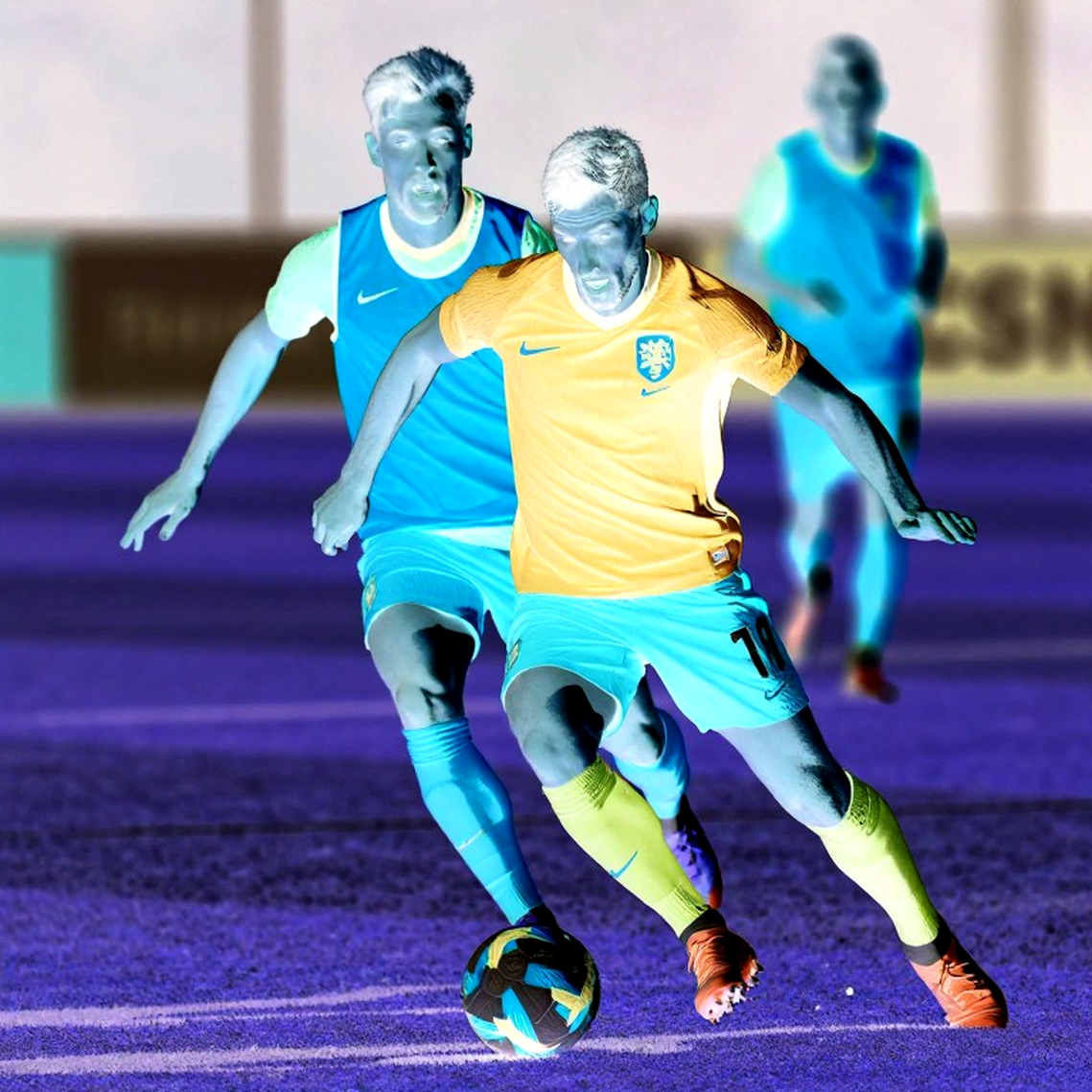
That sentence is simple, and its weight is not. The structural answer to a long-term injury is never really the market — it is the academy, because injury is the rare moment when an academy boy is handed the minutes that convert him from prospect to asset. Minutes nobody would otherwise have given are now being given under duress. If he survives them, the club's depth curve changes and next window's spending is saved.
There is a human layer nobody writes about. For a twenty-one-year-old, suddenly granted minutes mean opportunity and dread at once. A mistake will be clipped, and that clip can become his identity for two seasons.
An asymmetry the report never draws
PSG's margin for error in Ligue 1 is wider than that of any comparable elite club. Domestically this loss can be absorbed across four or five matches without serious points damage. In the Champions League knockout rounds the same loss carries an entirely different meaning — two legs, and an opponent built to find every weakness.
The three paths are therefore not three. Each has a domestic version and a European version. A decision that is rational in the league can be self-destructive in Europe.
Contrarian angle: 'who' is the wrong question
Everyone is asking who plays. Enrique may have another answer, and it is not a name — it is a shape.
When a left-sided star disappears, many coaches narrow the pitch. The left winger drifts inside, the left-back pushes higher, two players combine to create the overload in the half-space, and the opposite winger attacks 1v1 in isolation. That does not restore Kvaratskhelia's individual craft, but it refills the space he used to create.
This is why the three-path headline is a journalistic simplification. The fourth route is the cheapest and the fastest — changing your own structure. No fee, no registration deadline, no integration wait. The only cost is that a coach must admit his favourite solution will not work right now.
The second error is trusting the timeline. The public phrase 'several months' is almost always a floor, not a ceiling. Clubs publish optimistic schedules because optimism sells tickets and suppresses panic. ACL rehabilitation leaves a long shadow even after the return, and that shadow is exactly when expectations peak.
What remains
From a balcony in Khulna I learned one thing: the morning after a great win is the most fragile morning of all. The scoreline is still bright, but a question moves in — is this team standing on a system, or on one man's legs?
The next four to six matches will answer it. If Godts or Mayulu fills that space, this becomes a story about depth: a club discovering it already had enough. If not, it becomes the older story — expensive squad, expensive market, and one empty flank.
When the ball goes backwards instead of forwards on the left touchline at the Parc des Princes in the 88th minute, we will know which path Enrique chose. The camera will show the player. The real question belongs to the coach: did he trust his plan, or did he reach for the market?
The 94th minute is not a time; it is a held breath. And this season PSG's 94th minute began just before the January window opened.